Wear zone
Equipment, location and the surface being protected
As a drawing-led wear plate supplier, ROCKVANTA supplies wear plates, wear blocks, ceramic wear liners, composite wear liners and chute liners for project applications. Send the wear-zone details, operating conditions, interface dimensions and quantity so product construction and inspection requirements can be reviewed before quotation.
Equipment, location and the surface being protected
Material handled, abrasion, impact and operating conditions
Shape, dimensions, fixing method and adjacent structure
Material notes, inspection records and hold points
Send the working position, wear mechanism, drawing and required service conditions. ROCKVANTA uses these inputs to review the product family, material, construction and production requirements.
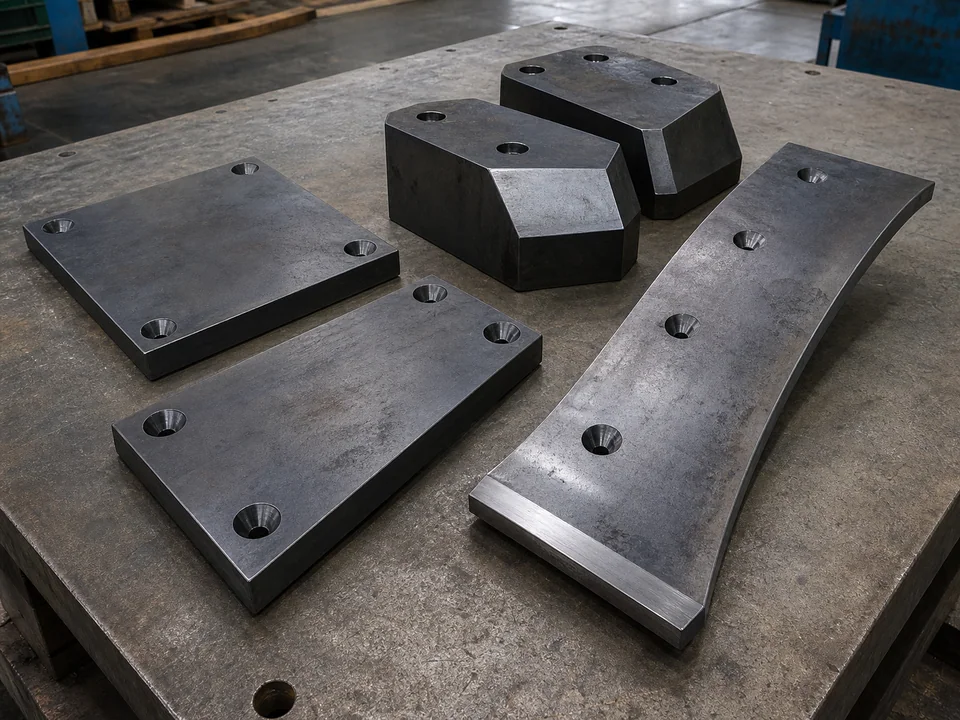
For drawing-defined plates, blocks and fabricated wear components. Send the wear location, overall geometry, fixing details and any specified material or hardness requirement.
Define a Steel Wear Part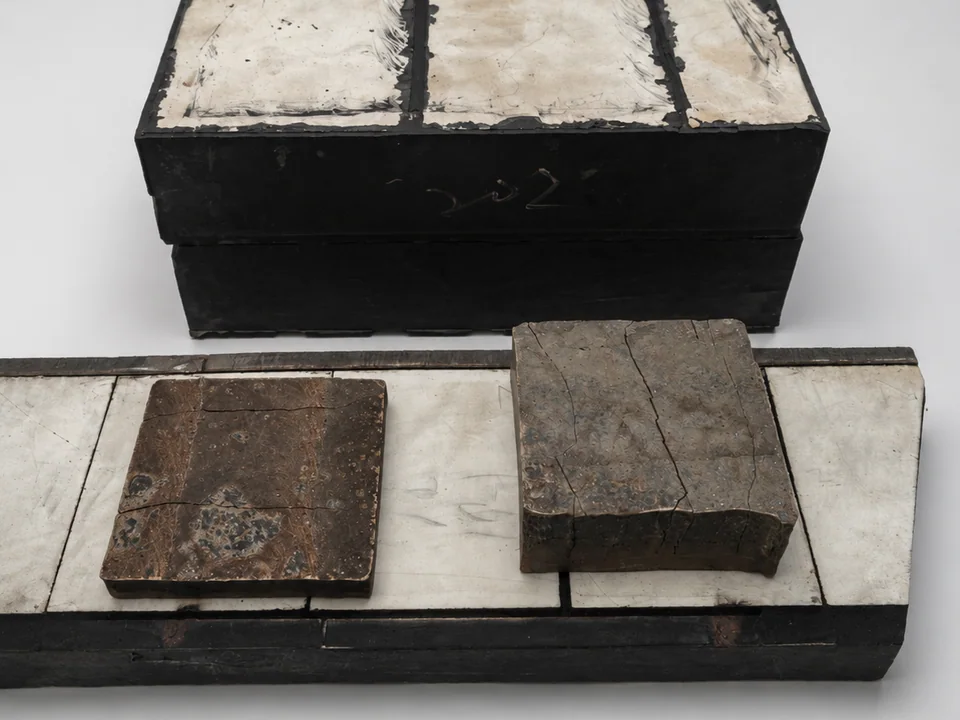
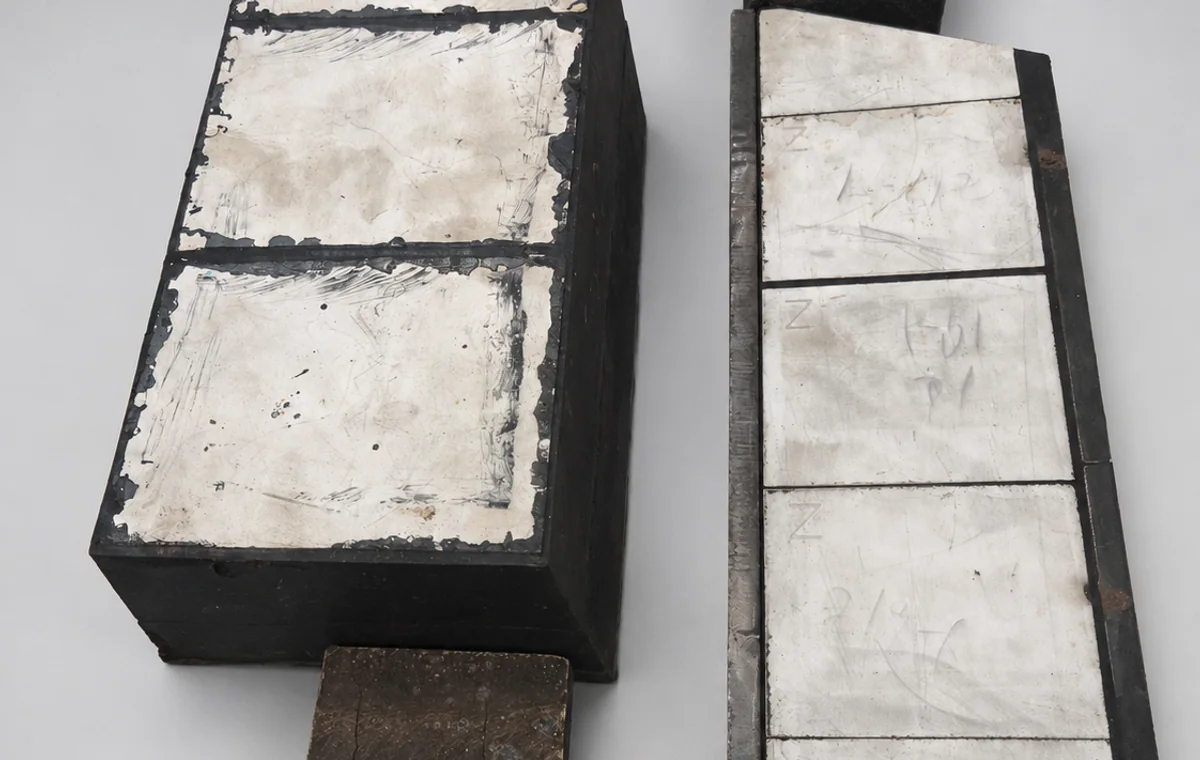
For ceramic-lined panels and formed liner sections used around defined wear zones. Provide the supporting structure, segment layout, retention method and service conditions.
Define a Ceramic Liner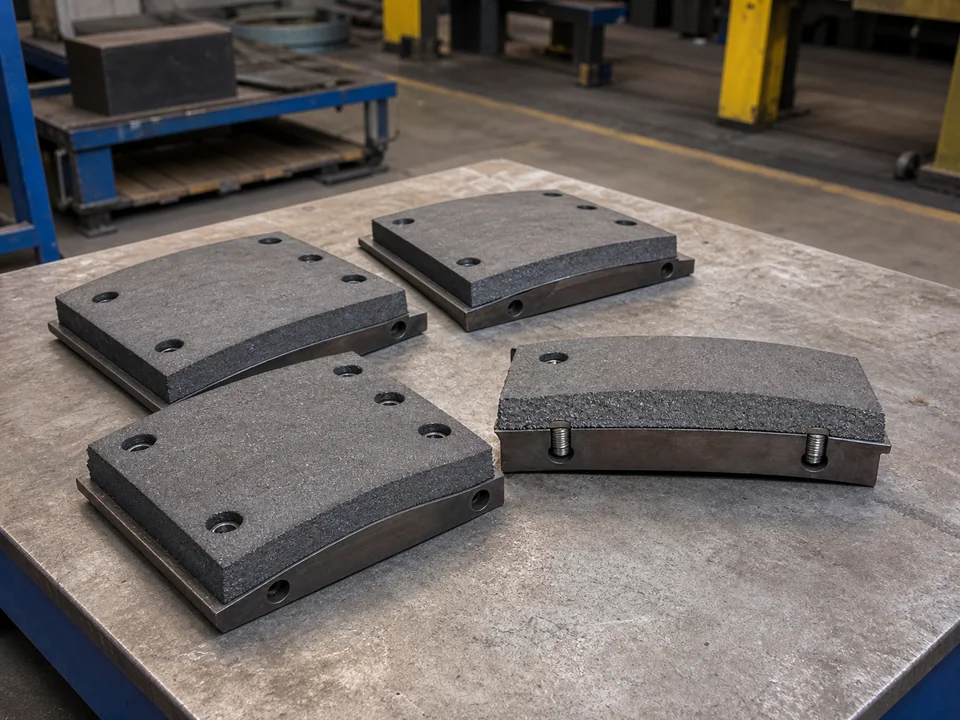
For project-specific liner assemblies that combine more than one functional material or layer. Define the construction, backing, interfaces and acceptance criteria in the RFQ.
Define a Composite Liner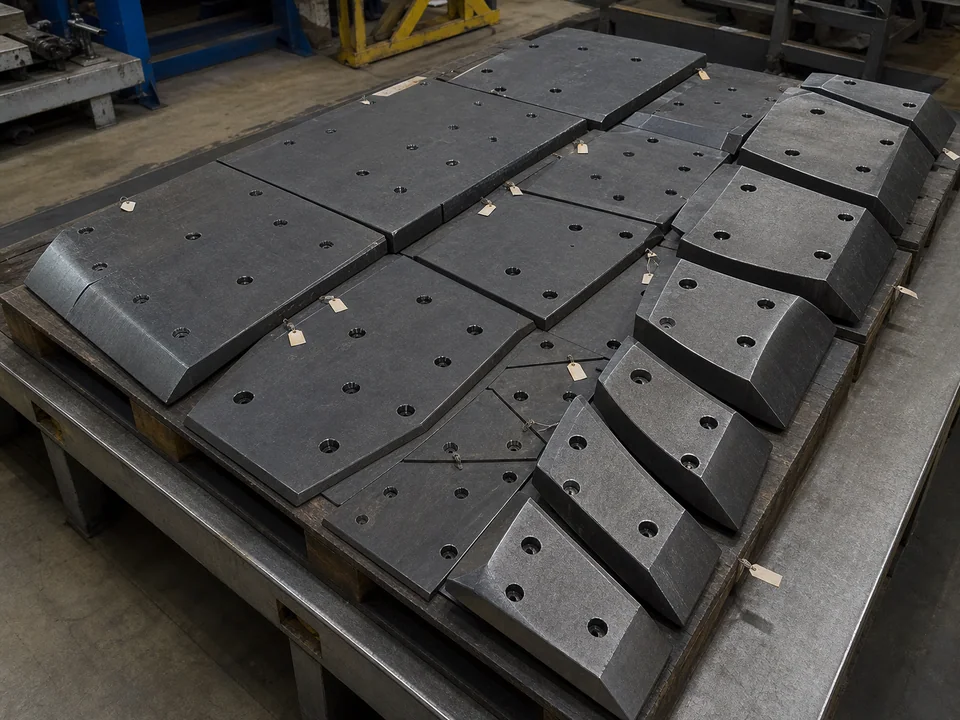
For chute liner panels and shaped sections manufactured to the approved installation layout. Include panel position, flow direction, fixing method, access constraints and replacement boundaries.
Map the Chute Wear ZoneROCKVANTA manufactures custom and project-based wear parts. The quotation confirms the material, hardness, dimensions and manufacturing scope for the enquiry.
Weld-overlay wear plates use wear-resistant powder deposited onto a base plate. For steelworks, coal-mine and iron-ore applications, send the worn area, material handled and attachment drawing so we can review the liner construction.
Send the liner position, wear mechanism, material flow, operating conditions and maintenance access for technical review.
Identify the bulk material and where it contacts the protected surface.
Describe the dominant wear mode and any drop, strike or loading condition.
State relevant heat, moisture, corrosion or contamination constraints.
Show the supporting structure, fixing method, clearance and replacement access.
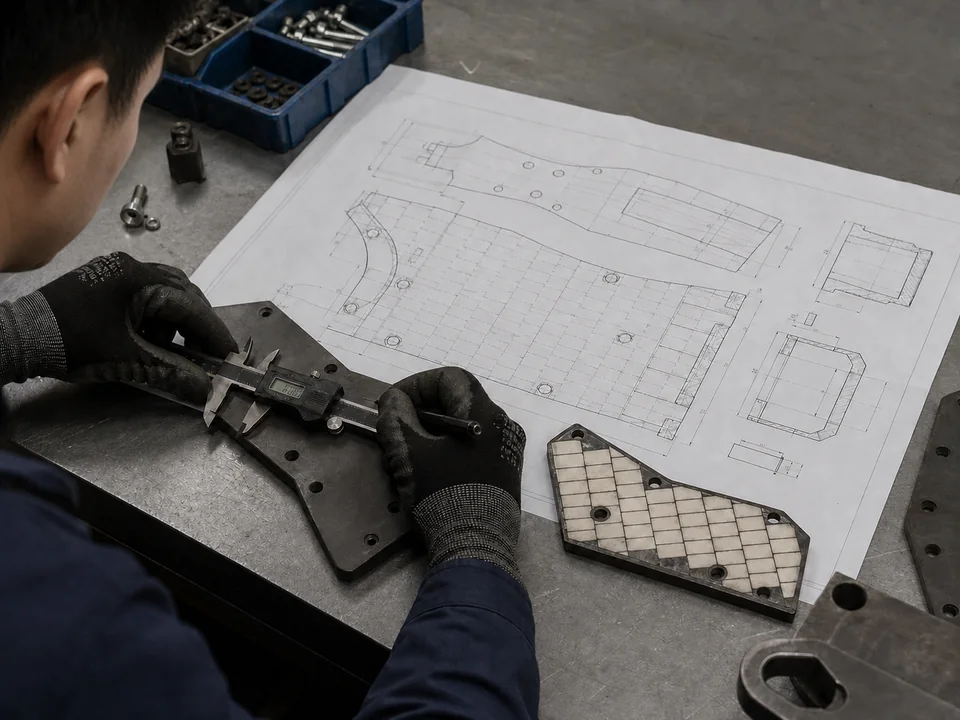
Send the drawing, sample or measured layout together with inspection and documentation needs.
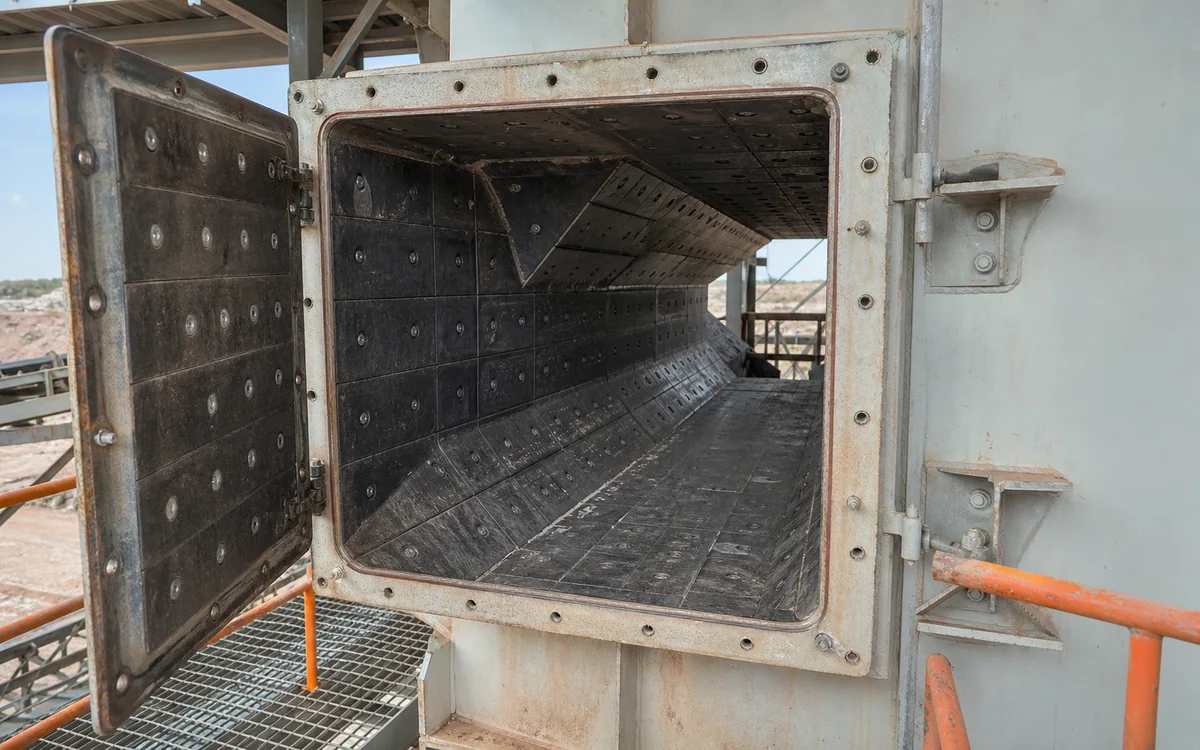
Mark each feed point, transfer section, chute and discharge wear zone on the drawing or photographs. Record the impact, abrasion, flow direction, maintenance access and the surfaces that belong to one replaceable set.
ROCKVANTA uses that information to review the product family, panel layout, material construction, required production processes and acceptance points for the enquiry.
The production steps depend on the product construction and the approved drawing.
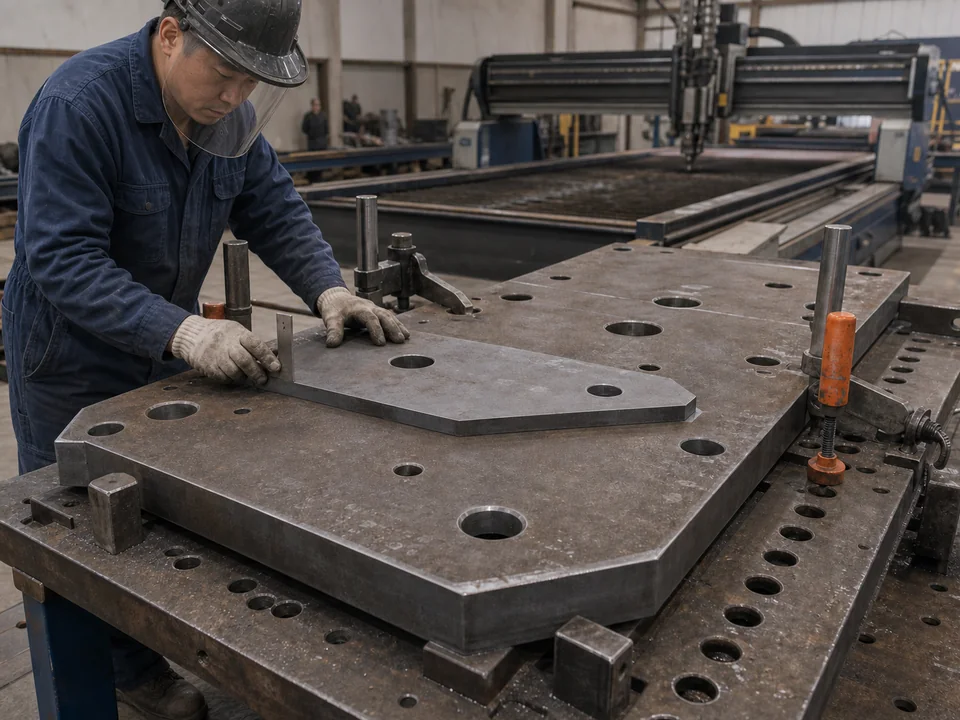
Resolve the liner position, geometry, backing, fixing features, adjoining structure and open technical points.
Plan the applicable cutting, blanking, drilling, machining, welding or fabrication steps where required.
Coordinate the liner layout, backing and assembly details defined for the project. No universal fixing method is assumed.
Connect dimensional checks, material documents, hardness testing, NDT and other records to the quoted scope where applicable.
Wear plate, ceramic, composite or chute-liner type
Geometry, backing, fixing and adjoining structure
Checks and records agreed for the quoted scope
No single process sequence, bonding method, welding method or inspection package applies to every wear system.
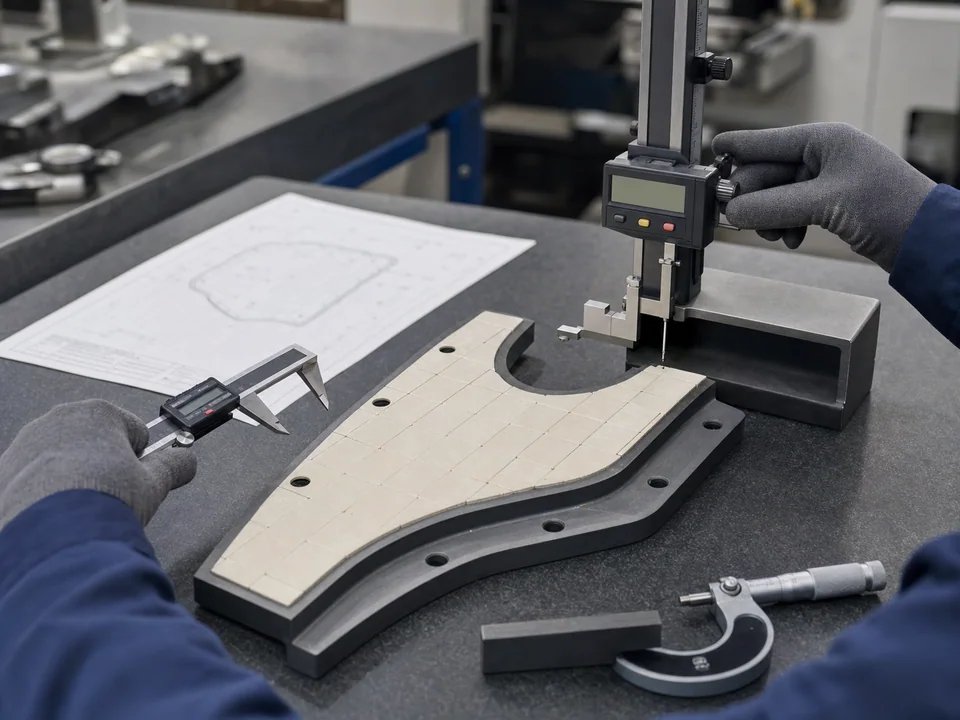
Tell us which dimensions, interfaces, material records, surface conditions, reports or hold points are required. Inspection is planned against the approved drawing, specification and purchase requirements.
Panel outline, hole pattern, mating faces, clearances and installation sequence.
The specified material, layer or backing definition and any required records.
Surface, edge, joint and assembly conditions that form part of acceptance.
Inspection reports, material documents, NDT or traceability where applicable.
If required, the buyer may arrange an inspector, nominate an inspection body or ask ROCKVANTA to coordinate with a suitable provider. Inspection timing, scope and cost must be agreed before the order or shipment. Inspection, reinspection and report fees are buyer-paid.
ROCKVANTA owns and operates five specialized manufacturing bases. Our team reviews the wear zone, product definition, material, production and inspection requirements, assigns the relevant base and coordinates any supporting work.
Production scope, available capacity and timing are confirmed for the specific RFQ.
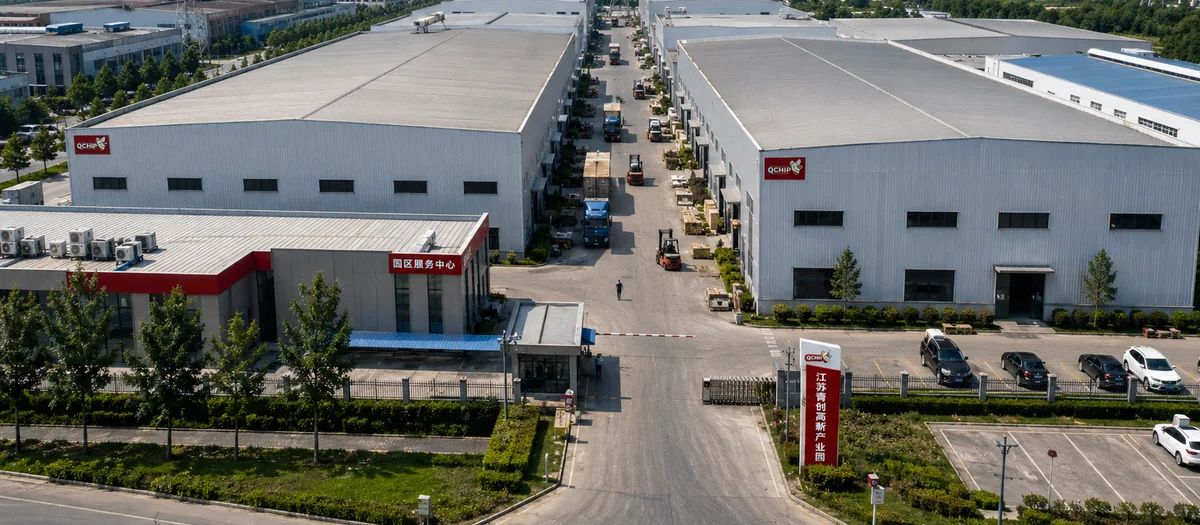
Review the wear zone and approved inputs
Assign the relevant manufacturing base
Coordinate the required production processes
Confirm inspection, packing and project scope
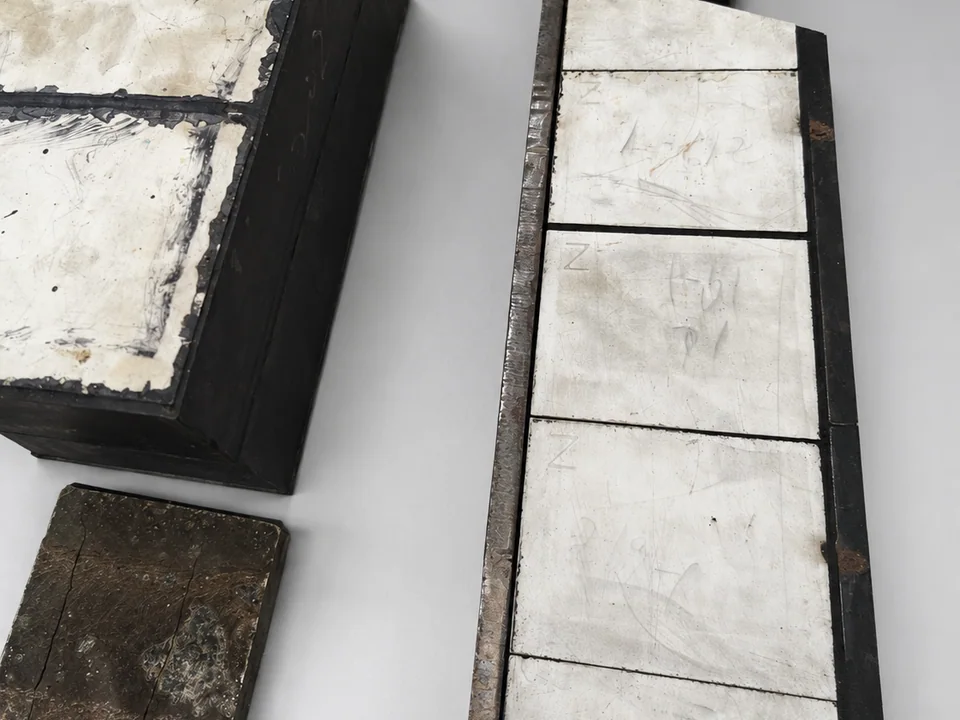
Lead time, MOQ, inspection scope, documentation and packing are confirmed for the specific RFQ.