
Equipment buying guide
Mini Skid Steer Selection: Capacity, Lift and Attachment Compatibility
To match a mini skid steer with an attachment, check the mounting interface, the attachment’s power and control requirements, and the load it must handle at the working position. A familiar-looking mounting plate is only one part of the comparison.
Start with the tool you already own or the job you need to do. The checks below help you collect the information for a machine-and-attachment quotation.
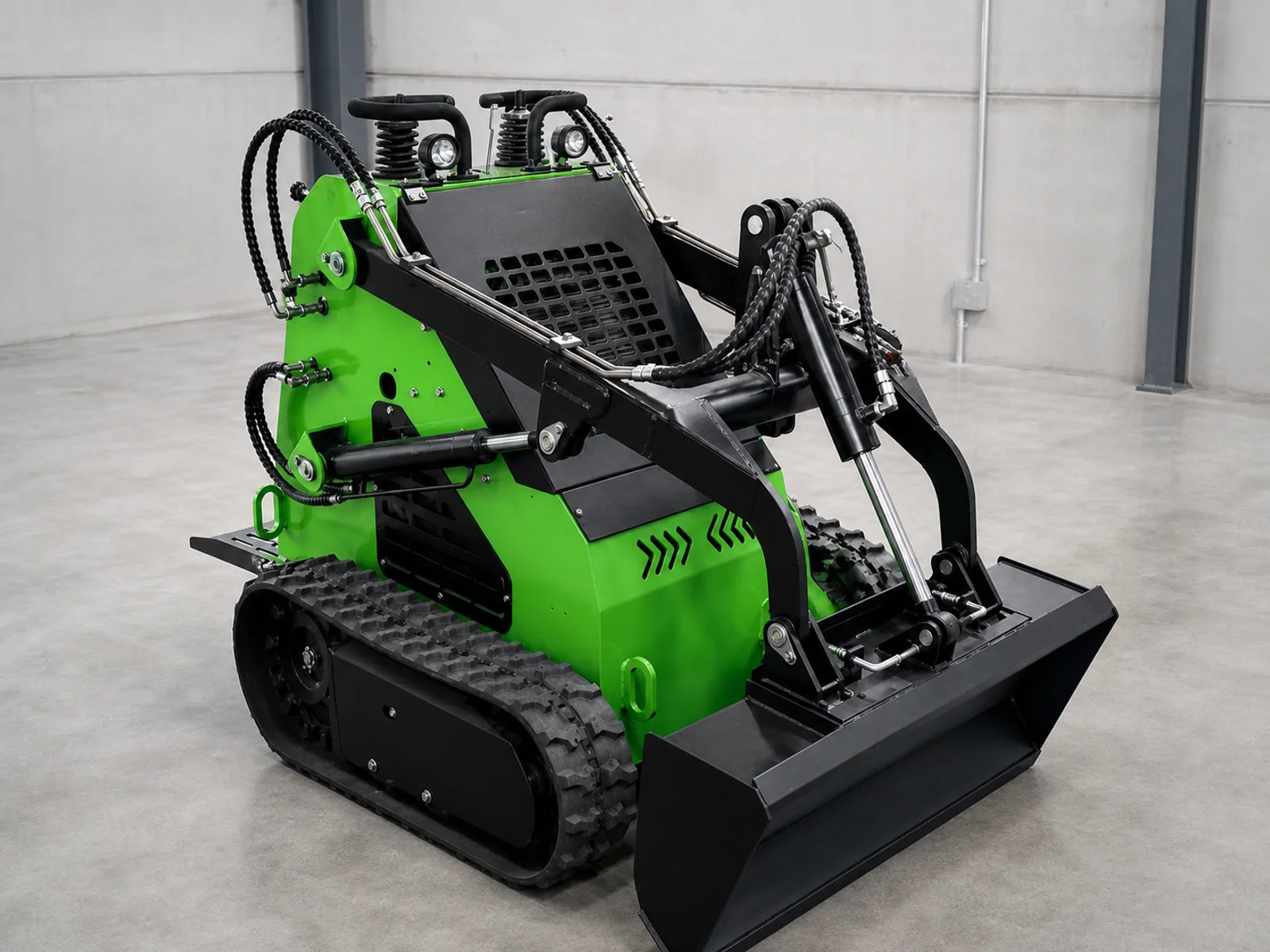
What will the attachment do?
Loading loose material, placing a pallet and driving an auger ask different things of the same machine. Name the task, the material and the point the tool must reach. If a tool will run for much of the shift, include the expected working cycle.
For an existing attachment, send its model plate, manual or technical sheet with photographs of the mounting face and connections. Photos help identify the arrangement; dimensioned drawings and hydraulic requirements are still needed to confirm a pairing.
If the job is mainly carrying material between two points and tipping it out, compare mini crawler dumpers before choosing a loader and bucket. For a wider equipment enquiry, start with the equipment range.
Compare both sides of the connection
Ask for the exact machine configuration and attachment revision on the quotation. Work through the three checks below with both sets of documents. Leave missing values marked as open questions until the supplier confirms them.
| Check | Machine-side information | Attachment-side information | Result to confirm |
|---|---|---|---|
| Mechanical fit | Mounting-face dimensions, locking arrangement and available movement. | Mating dimensions, locking points, tool weight and load-centre information. | The specified tool mounts and locks correctly, with clearance through its intended movement. |
| Hydraulics and controls | Available auxiliary flow and pressure, couplers, return arrangements and controls for this configuration. | Required flow and pressure range, connector specification and any return, drain or control requirements. | The machine can supply the tool’s stated requirements for the proposed working cycle. |
| Working capacity and space | Capacity definitions and conditions; lift, reach and overall working dimensions. | Tool weight, load position and dimensions in the working position. | The combined configuration can complete the stated task within its documented limits. |
Do all mini skid steers use the same attachments? The product name alone does not establish compatibility. Ask for confirmation of the specific machine and tool. An adapter also needs review: it can change the attachment position, combined weight and available clearance.
Which capacity figure should you compare?
Keep the original capacity label beside every number in your comparison. Rated operating capacity, tipping load and a brochure’s “maximum payload” can describe different limits or conditions. Ask the supplier to identify the applicable definition, test basis and attachment configuration.
- Rated operating capacity
- Request the stated working rating and the conditions attached to it. Check which tool and load position it covers.
- Tipping load
- Treat this as a stability-related figure under stated test conditions, not permission to carry that load during work.
- Maximum payload
- Ask how the manufacturer defines the term. Do not relabel it as a rated operating capacity without that definition.
- Attachment weight and load centre
- Give the supplier both. A heavier tool or a load held farther forward changes the configuration being assessed.
Do not calculate an allowable working load from a generic percentage of tipping load. Nor should you subtract a tool’s weight from an undefined payload figure and treat the remainder as a safe load. Obtain the rating for the intended configuration and follow its manual.
Why engine power is not enough
Engine power does not tell you the hydraulic flow and pressure available at the attachment connection. For a powered tool, compare its specified operating requirements with the machine’s auxiliary hydraulic data.
- Keep flow and pressure units visible. Ask whether each figure is an operating value, an available range or a limit.
- Identify the hydraulic couplers and the required flow direction. Include a separate return or case-drain requirement if the attachment specifies one.
- Check the control functions the tool needs, including any electrical connection or continuous-flow control.
- Describe how long the tool runs and whether it must operate while the machine travels or lifts. Ask the supplier to confirm the available performance under that combined duty.
Include these questions before agreeing the price. Where a required machine-side value is missing, request it rather than assuming that a larger engine or a matching hose connector settles the issue.
Will the tool reach the working point?
For unloading into a container, show the height and horizontal position of the receiving edge relative to the surface the machine will stand on. For other tasks, mark where the tool must operate. Include obstacles above and beside that point.
| Record | Include in the enquiry |
|---|---|
| Receiving or working point | Height, horizontal position, approach direction and space around the tool. |
| Travel and turning space | The narrowest opening, corners, overhead restrictions and the fitted attachment’s dimensions. |
| Ground conditions | Surface type, uneven areas and any slopes on the intended route. |
| Transport arrangement | Loading method, vehicle or trailer space and the machine-plus-attachment transport weight. |
Maximum lift height and maximum reach may refer to different positions. Ask for the relevant dimensions at your working point, with the proposed attachment fitted. A clearance check does not establish the permitted load at that position; the supplier needs to confirm both.
Use site measurements for selection, then follow the supplied machine and attachment instructions for operation. This checklist does not specify safe slope angles or operating procedures.
Read the ELT model references separately
The mini skid steer page includes EHY0.5 and EHY1.0 from the manufacturer’s confirmed information, alongside a separate ELT450L brochure reference. These are separate model records.
For ELT450L, the brochure lists “Maximum payload 450 kg”. Keep that wording when requesting clarification. It does not establish a rated operating capacity for EHY0.5 or EHY1.0, or approve a particular attachment.
Ask ROCKVANTA to identify the quoted model, the load definition and the supplied attachment in the same configuration sheet. Where the mounting dimensions or auxiliary hydraulic data are still missing, those remain questions to resolve before ordering.
Send the machine and tool details together
- If you already have an attachment
- Send its model, technical sheet, mounting drawing and connection details. Add the task, working load, target working point and site restrictions.
- If you are choosing both
- Describe the job and material, the load to be handled and the space available. Add quantity, destination and any tool preference. ROCKVANTA can review which machine-and-tool configuration to quote.
You can start with the information available and identify what is missing. The quotation should name the machine and included attachment, any adapter or connection kit, the agreed checks and documents, and unresolved points. Ask which service information and replacement parts are included or quoted separately.
Use the message and attachment fields on the RFQ form. The checklist is optional; there is no need to complete every line before making an initial enquiry.