
Ground-engaging parts guide
How to Choose Wear-Resistant Bucket Teeth
A tooth that rounds off in abrasive ground raises a different question from one that breaks while plenty of metal remains. Before ordering a harder replacement, look at the worn part and the job it was doing.
Wear-resistant bucket teeth need a suitable working profile, a sound connection to the adapter and a material specification matched to the duty. This guide covers those checks, including what to ask when hardfacing or cladding is proposed.
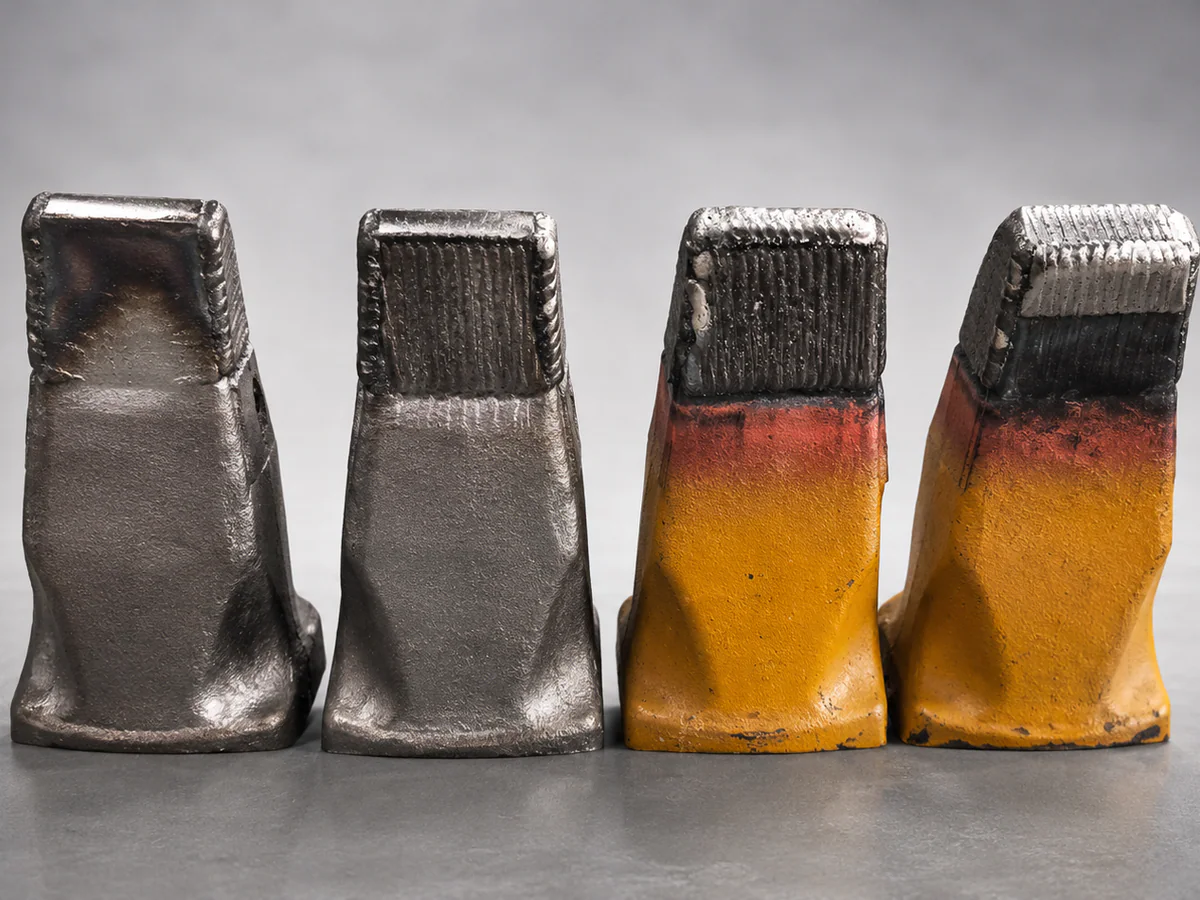
What is wearing out first?
Keep photographs of the tooth when new and when removed. Mark its position on the bucket and record the material handled, working hours and reason for removal. A row of loose teeth on a bench loses some of that useful context.
| What you see | What to record | What to ask |
|---|---|---|
| A rounded or shortened point | Side and front views against the original profile, with a scale in the photograph. | Does the proposed profile suit this ground, and what wear comparison supports the material choice? |
| A chipped or broken tooth | The fracture location, remaining profile, operating conditions and any known impact event. | What did the inspection establish about the failure before a different material or surface treatment is chosen? |
| Uneven wear or movement at the connection | The tooth position, mating pocket, adapter and retention parts. | Are the mating parts still within the limits specified for this tooth system? |
These observations help organise an inspection. A photograph alone cannot establish why a tooth failed. Suspected cracks, loose retention or damage to the adapter need assessment by qualified maintenance personnel under the equipment and tooth-system instructions.
How does the tooth profile affect the choice?
The working profile affects how the tooth enters the material and how its shape changes with wear. Compare profiles within the correct adapter and retention system, then decide which problem the replacement needs to address.
- When entry is difficult
- A broad, blunt contact face can increase the force needed at the tooth. A more penetrating profile is worth evaluating, provided its section can carry the expected load. Compare the working end when new and partly worn: the shape used for most of its service matters as much as the fresh point.
- When the point wears away
- If the tooth enters the ground readily but loses its point through wear, compare the usable metal in that wear zone. A heavier tooth is useful only if the extra material serves the job. Check where it sits and what profile remains before the specified replacement limit.
A Luleå University study of cable-shovel teeth found that tooth shape and length affected wear and penetration force in the bucket studied. Those findings support comparing profiles under the intended duty; they do not give a universal best tooth shape.
Repeated chipping or fracture while much of the tooth remains calls for a different review. Examine the damaged section, impact exposure, material condition and fit before choosing a slimmer point or adding wear material. Research on bucket-tooth wear mechanisms distinguishes impact-dominated and abrasion-dominated conditions. A profile trial should address the main damage mechanism identified in the inspection.
For the shortlist, compare drawings of the working end, the section behind it and the mating pocket. Include the ground, tooth position and removal reason with the enquiry. The supplier can then review the proposed profile, material and adapter fit together.
What makes a bucket tooth wear-resistant?
The tooth body and any added wear layer have different jobs. The specification should identify the base material and its heat-treatment condition, then describe any surface treatment separately. A quotation that gives only “high hardness” leaves too much unresolved.
Hardness, microstructure and the type of wear all matter. In a 2024 laboratory study of bucket-tooth coatings, researchers compared hardfacing and laser-clad layers using a dry-sand rubber-wheel test. That is evidence about the tested specimens under those conditions. It does not establish the working life of a different tooth in a mine or quarry.
- Ask for the base material designation and the condition in which the tooth will be supplied.
- For a hardness result, ask for the scale, test method and measurement location. Keep surface-layer and tooth-body results separate.
- For a wear claim, ask what was tested, what it was compared with and how the test relates to your ground.
When impact is part of the duty, include it in the enquiry. An abrasion result alone leaves the response to impact unresolved. Avoid selecting a replacement by the largest hardness number in a comparison table.
Can hardfacing or cladding extend tooth life?
A suitable wear layer can reduce abrasive material loss. Any increase in working life needs to be checked against the tooth, treatment and duty.
Hardfacing adds wear-resistant material to a component surface. Laser cladding is a deposition process that uses a laser to form a bonded layer. Either proposal needs a defined substrate, deposit and application area. The process name alone is not a performance specification.
A review of hardfacing research describes how the substrate, consumable and deposition conditions affect the resulting layer. It also discusses cracking and the difficulties of treating quenched-and-tempered steels. A qualified procedure and inspection criteria are therefore important parts of a surface-treatment proposal.
Ask the supplier to mark the treated area on a drawing and state the deposit material, specified thickness, finished profile and inspection requirements. Confirm whether the quotation covers a complete new tooth or treatment of an existing part. Those are different supply scopes.
For a used tooth, have its remaining section and condition assessed first. Obtain approval for the proposed treatment from the responsible equipment or tooth-system authority. The review must also address the mating pocket and retention features. This is a job for a qualified repair process, with settings and acceptance criteria specific to the part.
Will the replacement fit the existing adapter?
Start with the tooth-system reference, part number or controlled drawing. Supply clear views of the mating pocket and the adapter, together with the pin and lock arrangement. If the reference is unknown, send the available dimensions or discuss providing a sample.
A worn pocket is a record of the used part, not a reliable substitute for the original nominal dimensions. Identify which measurements come from a drawing, an unused part or a worn sample. The supplier can then state what still needs verification.
Confirm whether the price includes teeth only, matched pins and locks, or adapters as well. Our bucket teeth and GET parts page sets out the component references and mating information used for an enquiry.
How long should a bucket tooth last?
There is no service-hour figure established for the parts shown here. To evaluate a proposed replacement, agree the trial conditions and removal criteria before fitting the trial set. Use the replacement limits specified for the tooth system, rather than an arbitrary percentage of metal remaining.
- Match duty and tooth position
- Record material, machine and bucket, tooth position, working hours or tonnes handled, and any changes in duty. Identify the reference part and the proposed part.
- Record why each tooth came off
- Log routine wear, breakage, retention problems or another removal reason separately. Keep dated photographs and note any trial that ended before the wear limit was reached.
For each option, add the tooth purchase price, any separate surface-treatment charge and the recorded fitting and replacement costs. Count each charge once, then divide the total by the tonnes handled over the same interval. Use the same cost categories for both options.
If reliable tonnage is unavailable, working hours can provide a comparison for similar duty. Label the measure used and keep downtime assumptions visible. A longer interval between changes does not, on its own, establish the lowest operating cost.
What should you send for a quotation?
Send the tooth drawing or part reference, photographs of the working end and mating pocket, and a short description of the ground. Add the adapter and retention references, quantity and delivery destination where available. For a surface-treatment enquiry, identify the existing tooth and the area you want reviewed.
If information is missing, send what you have and identify the unknowns. ROCKVANTA reviews drawings, samples and mating references before quoting. The quotation should identify the proposed part or treatment, included components and any fit or inspection details that remain to be agreed.