
Track roller or bottom roller
Position to confirm Lower running gear supporting the track path
Useful reference Installed-position photograph, drawing or old part
Crawler Undercarriage Running Gear
Track rollers, carrier rollers and idlers are reviewed against the required running-gear position, drawing or sample, interfaces and supply scope. Send the available reference so the technical team can identify the points that still need confirmation.
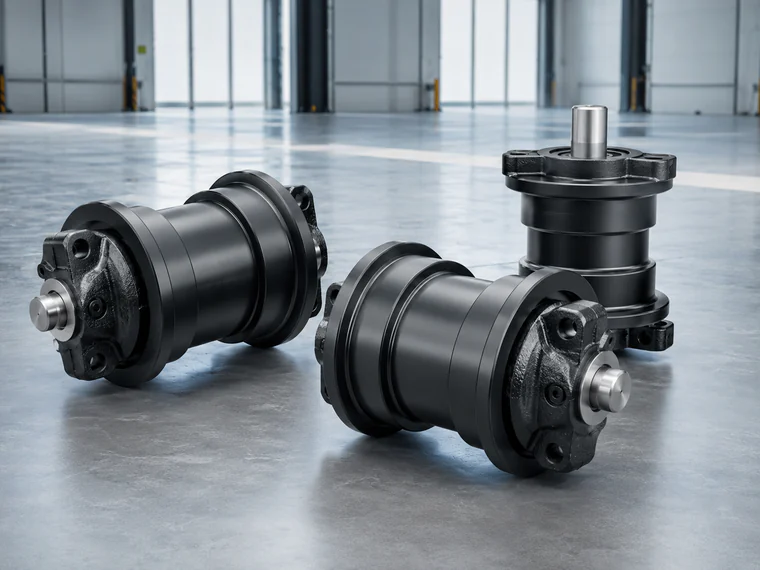
Running-Gear Position
Record the installed position before quotation because terminology varies between equipment manuals, markets and purchasing teams.
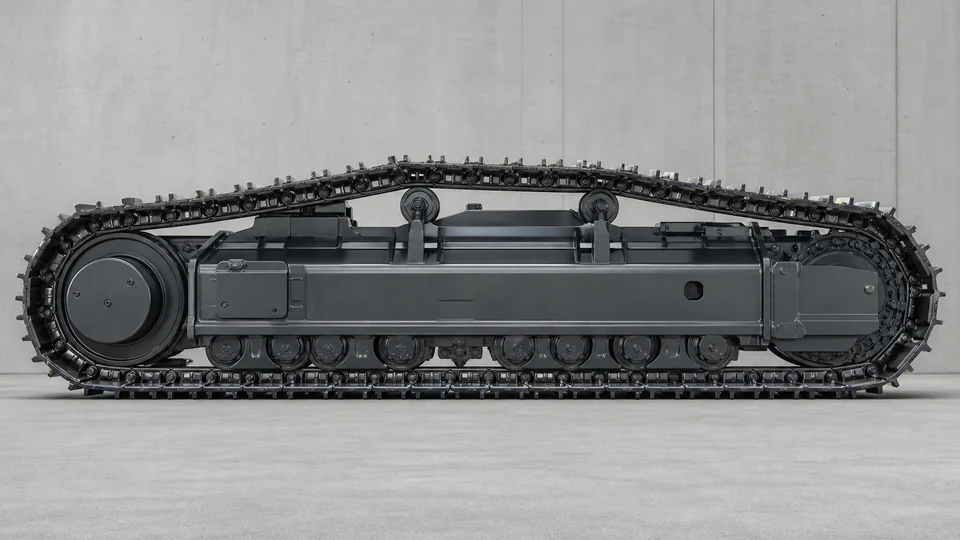
For a carrier roller enquiry, show the upper mounting position. For an idler enquiry, identify whether the required position is front, rear or still unconfirmed. Equipment make and model support the review; compatibility and interchangeability are confirmed only against the supplied reference.
Position to confirm Lower running gear supporting the track path
Useful reference Installed-position photograph, drawing or old part
Position to confirm Upper running-gear position
Useful reference Mounting location, bracket detail and controlled dimensions
Position to confirm Front or rear guiding position, as defined by the equipment and drawing
Useful reference Position, retention method and mating-interface information
Position to confirm Technical classification remains open
Useful reference Equipment reference, photographs and any available sample or drawing
Large and ultra-large excavator roller enquiries include Caterpillar, Hitachi and Liebherr applications. We review the wheel profile, shaft and mounting arrangement against your drawing before confirming the supplied assembly.
Product Definition
This page covers undercarriage track rollers, carrier rollers and idlers for excavators, dozers and other crawler equipment defined by customer drawings, samples or other supplied information. Use Conveyor Rollers & Idlers for belt-support rollers and bulk-material-handling idlers.
See Undercarriage & GET Parts for the wider running-gear family.
Undercarriage & GET Parts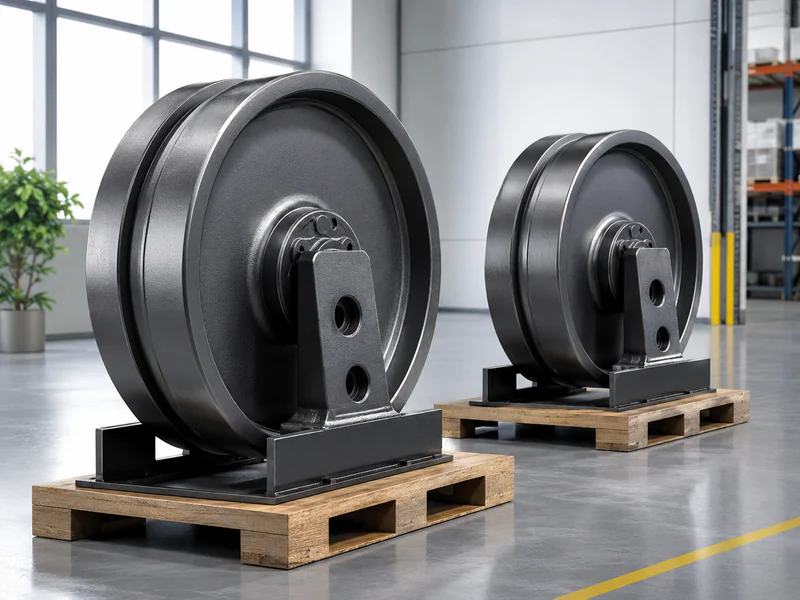
The quotation states what is included. Depending on the drawing or sample, the requested scope may involve the wheel body, shaft, bearing or bushing, seals, lubrication, bracket, mounting parts or an assembled condition.
Enquiries for belt-support rollers or bulk-material-handling idlers belong under Conveyor Rollers & Idlers.
Conveyor Rollers & Idlers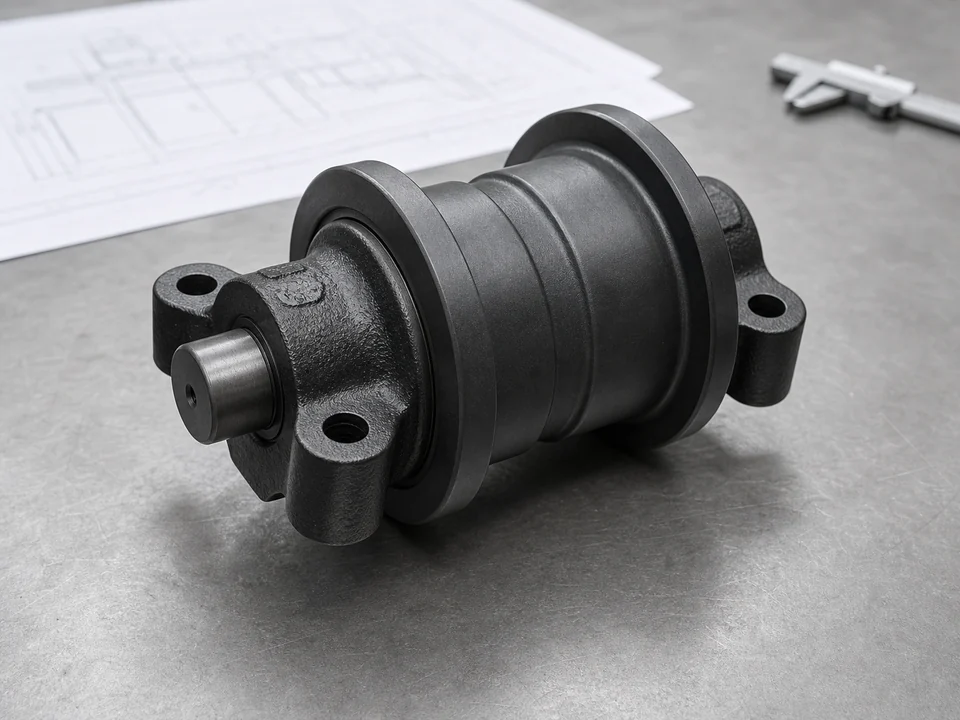
Drawing or Sample
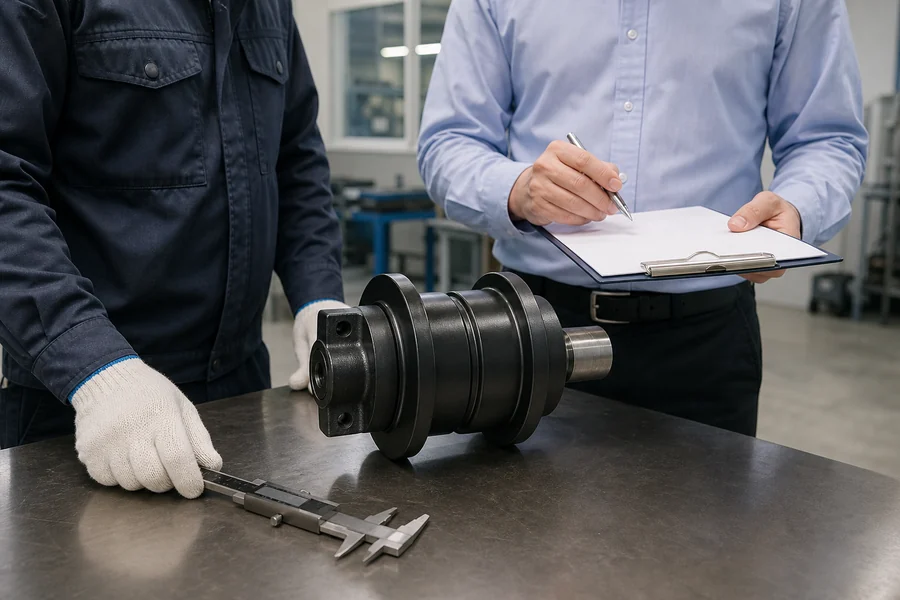
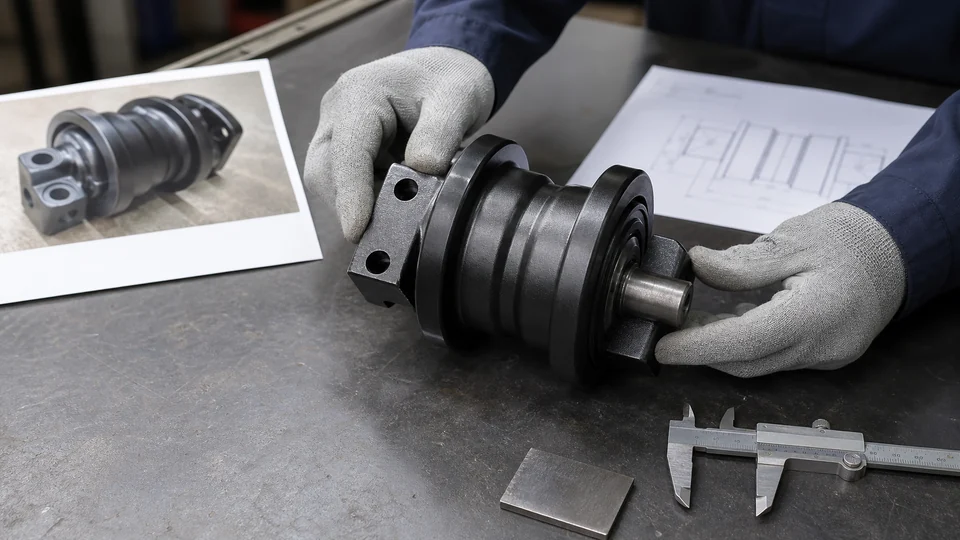
Use the model reference or external photograph to identify the enquiry, then provide the latest drawing revision, sample, old part or reference specification with the dimensions that control mounting and operation.
Where applicable, mark the overall diameter and width, tread or flange profile, mounting base, bracket, holes, shaft ends, retention features and mating interfaces. Identify the datums and dimensions that must be checked for acceptance. Include the relevant track-link, chain or adjacent-component interface so the factory can review fit against the supplied reference.
Agree on the reference, record the open points, then quote against that information. This reduces the risk of two suppliers pricing different scopes under the same part name.
Broader drawing and process review is described under Custom Manufacturing.
Custom ManufacturingProject Control Points
See Quality & Inspection for the wider control and documentation framework.
Quality & Inspection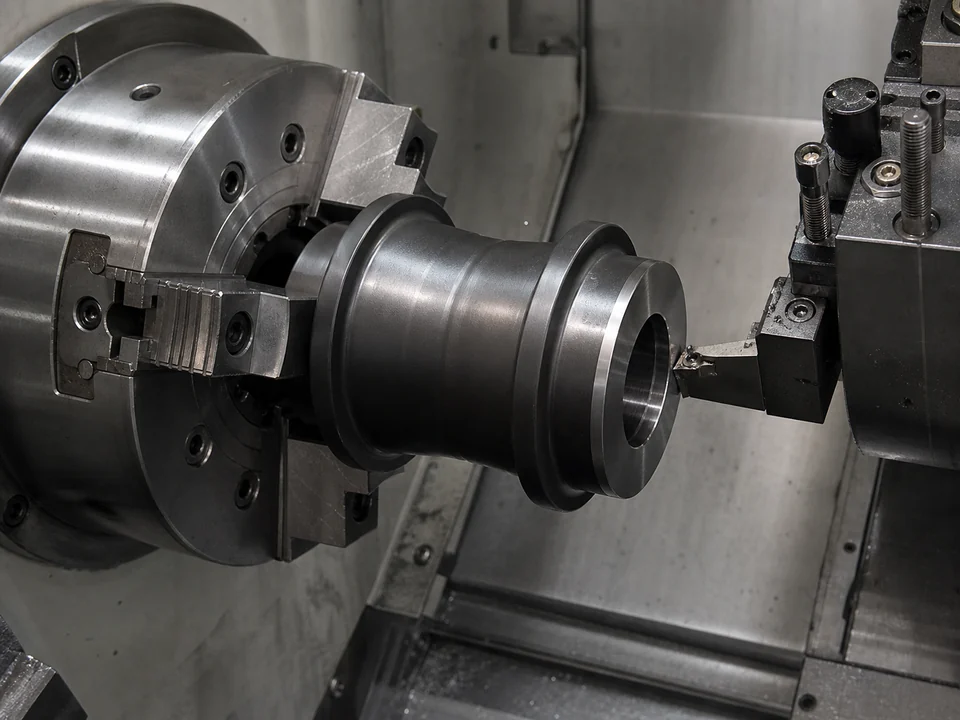
Material, hardness, heat treatment, surface condition and operating requirements should come from the approved drawing or project specification. List any missing values as open points for technical review.
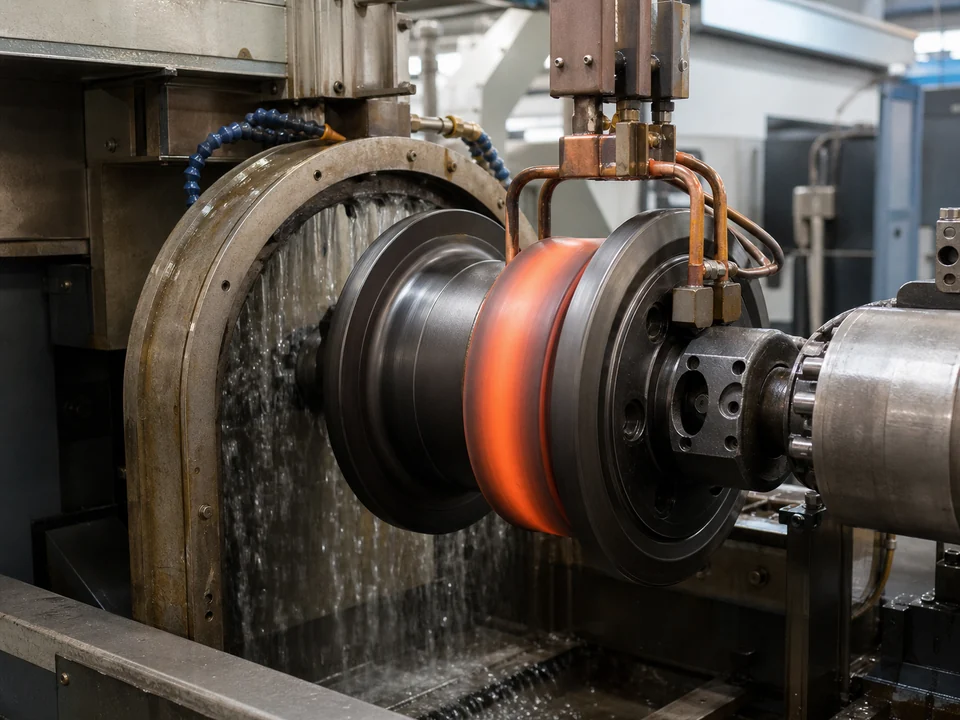
Production may include cutting, blanking, drilling, turning, milling, CNC machining, welding or fabrication, heat treatment, induction hardening and surface finishing where applicable. The required processes depend on the confirmed geometry, material, included components and acceptance requirements.
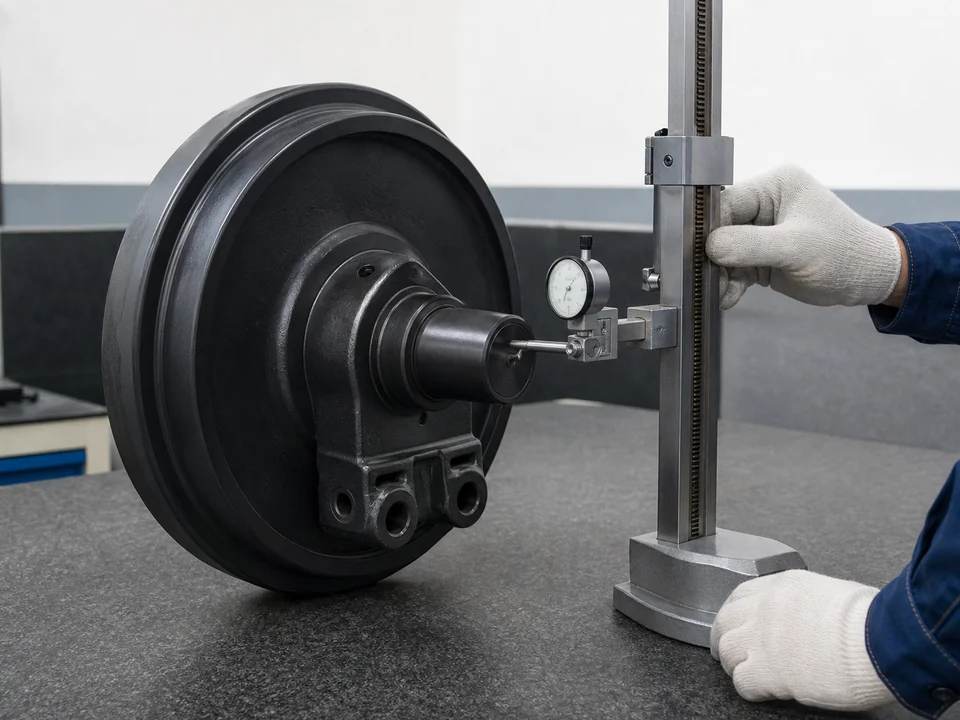
Inspection follows the same project information. Dimensional inspection and hardness testing can be planned where applicable. NDT or a functional check may be included when specified and relevant to the part. The quotation identifies any required runout, rotation, sealing, leakage, pressure or load checks.
Specify the records, sampling and hold points required for the crawler undercarriage components in the order.
Five-Base Coordination
ROCKVANTA owns and operates five specialized manufacturing bases. The technical team reviews the drawing, material, required processes, inspection and project requirements, identifies the most suitable base, and coordinates any supporting work. Base selection, production scope, capacity and timing are confirmed for the specific RFQ.
How We Select a Manufacturing Base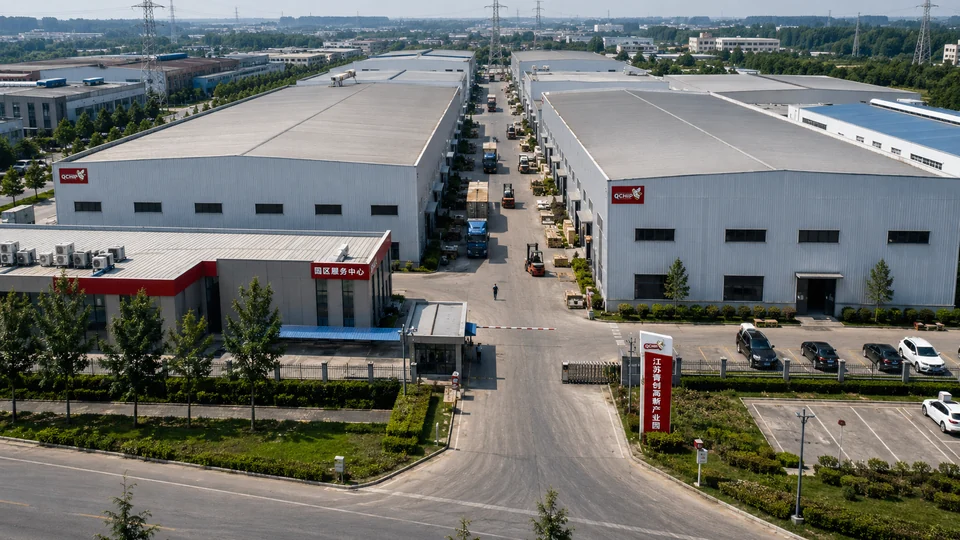
Project Release
Quantity, project stage, MOQ, lead time, marking, export packing, documents and the requested planning deadline are confirmed for the RFQ. A sample review, trial quantity or continuing-supply discussion records the technical stage of the enquiry; the quotation confirms the commercial terms.
Third-party inspection support can be included where required. The buyer may arrange an inspector, nominate an inspection body, or ask ROCKVANTA to coordinate with a suitable inspection body. Scope, timing and cost must be confirmed before order or shipment. Inspection, reinspection and report fees are buyer-paid.
Product-Family FAQ
Provide the equipment or application, component position, current drawing or other approved reference, critical geometry and interfaces, required supply scope, quantity and acceptance requirements. Unknown items can be listed for technical review.
Show where the part is installed and note whether it supports the lower track path, sits in the upper carrier position or acts as an idler. An installed-position photograph is useful when the terminology is uncertain.
Yes. A sample, photograph, old part or reference specification can start the review. The team will identify dimensions, interfaces, included-component questions and acceptance points that still need confirmation before quotation or production.
The quotation is reviewed against the current drawing or approved sample and the agreed supply list. It records the mounting, bracket, hole, shaft-end, mating-interface and included-component details used to define the scope.
They are confirmed against the approved drawing or project specification. If an input is missing, it stays open for technical review until the buyer and technical team agree on the requirement and related inspection record.
Dimensional inspection, hardness testing, NDT and relevant functional checks may be planned where applicable and when specified. The method, sampling, acceptance criteria and required records are confirmed for the project.
The buyer may arrange or nominate an inspector, or request coordination with a suitable inspection body. Inspection scope, timing, cost and buyer-paid fees are agreed before order or shipment. MOQ, lead time, packing and documentation are confirmed with the RFQ.
Structured RFQ
Track rollers, carrier rollers and idlers: identification guide →
Include as much of the following as is available:
List every unconfirmed item as an open point for technical review.
Submit Your RFQ[email protected]ROCKVANTA Machinery — presented with EONBIRD GLOBAL LIMITED.