
Manufacturing guide
Build-to-Print Manufacturing 101: From Drawing to Accepted Parts
A drawing can define a part precisely while leaving the order incomplete. The supplier still needs to know which revision to use, what the quotation includes and how the finished parts will be accepted.
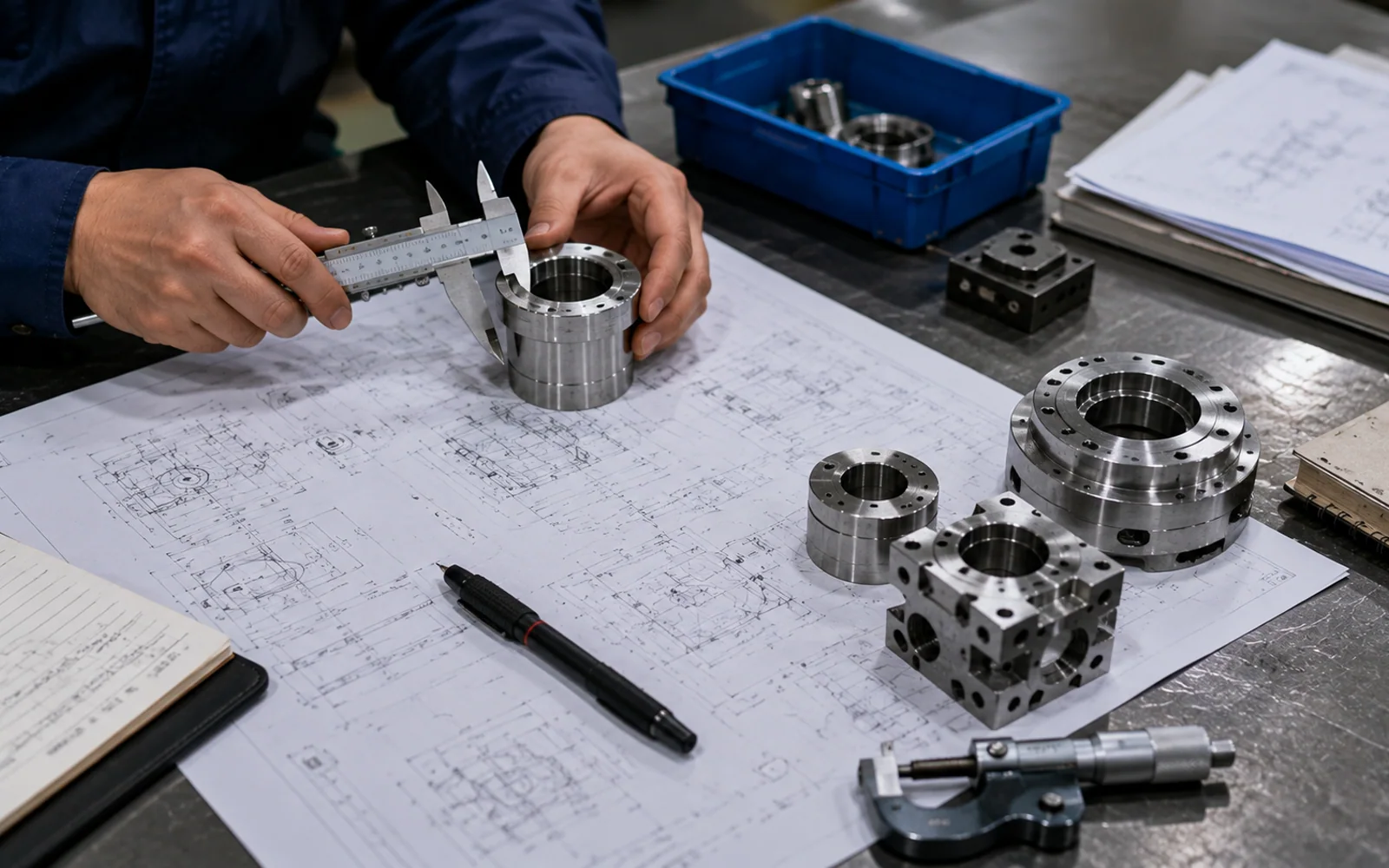
What does build to print mean?
Build-to-print manufacturing means making a part or assembly to a supplied, agreed design definition. The “print” may be a drawing package, an annotated model or a combination of files. What matters is that the requirements for manufacture and acceptance are clear.
Three enquiries can look similar in an inbox but involve different work:
- Build to print
- The buyer supplies an approved design definition. The manufacturer reviews how to make and inspect it, then works to the agreed drawing, model and specifications. Design responsibility and any additional engineering work should be stated in the order.
- Build to sample
- A physical part is the starting reference. Its geometry can be measured, but wear, hidden features, material condition and original tolerances may remain uncertain. Agree how those gaps will be resolved and approved before copying the part.
- Build to specification
- The buyer describes required performance, interfaces and acceptance. Detailed design may still be needed. Identify who will develop and approve it, and whether that work is included in the quotation.
For a sample-led enquiry, separate what must match from what may change. A worn bearing seat or damaged edge is useful evidence of the part’s history, but may be a poor target for the new part.
Give purchasing, production and inspection the same files
Send a file list with the enquiry and update it when the order is released. Record the revision inside each file, not just a filename such as “final”. Remove superseded files from the active package or mark them clearly as reference only.
- Drawing and model
- Part number, revision, units, drawing notes and model version. If both 2D and 3D files are supplied, say which information each controls. Resolve conflicting dimensions or notes before release.
- Material and finish
- Material grade and condition, any required heat treatment, coating or finish, and the specifications that apply. A material name alone may leave the delivery condition undecided.
- Assembly and BOM
- The bill of materials (BOM), quantities per assembly and component revisions. Mark purchased items, buyer-supplied items, matched parts and any assembly or fit checks required.
- Acceptance and records
- Critical characteristics, inspection stage, required reports and any buyer witness or hold point. State whether dimensions apply before or after treatment, coating or assembly.
A 3D model does not automatically replace every drawing note. An annotated model can carry tolerances and manufacturing information; a shape-only export may not. Agree what the receiving supplier can read and which file governs each requirement.
For shafts and other rotating parts, our shaft drawing checklist goes further into fits, datum references and runout. Keep those functional requirements in the controlled definition, rather than only in an email.
What should be resolved before material is cut?
A manufacturing review checks whether the proposed material, operations and inspection approach can meet the definition. Design for manufacture (DFM) comments may identify a difficult internal corner, inaccessible feature or tolerance that needs another setup. The useful response names the feature, the problem and a proposed action.
Put the answer back into the order
If a supplier proposes a different material condition, corner radius or finishing sequence, ask which requirements it affects. The person responsible for the design should approve or reject the proposal. Record an accepted change before the affected work proceeds.
Separate a clarification from an exception. Explaining which drawing note applies is a clarification. Offering a part outside an existing requirement is an exception that needs an explicit decision. A quotation marked “to drawing” should not leave a conflicting assumption buried in an attachment.
Compare quotations against the same quantity, material, finished condition, inspection records and assembly scope. Check tooling or fixture charges, buyer-supplied items, exclusions and the basis for the proposed timing. An early budget price with open technical points is not yet a fully agreed production order.
On large parts, add blank size, weight and access for handling and machining. See the large-part CNC checklist for the difference between a finished-part envelope and a workable setup.
Agree what the first article needs to demonstrate
A prototype used to explore a fit and a first article made for production approval may serve different purposes. State the purpose of the first delivery, the quantity and whether it uses the intended production material and processes. Record any differences before using its results to approve a batch.
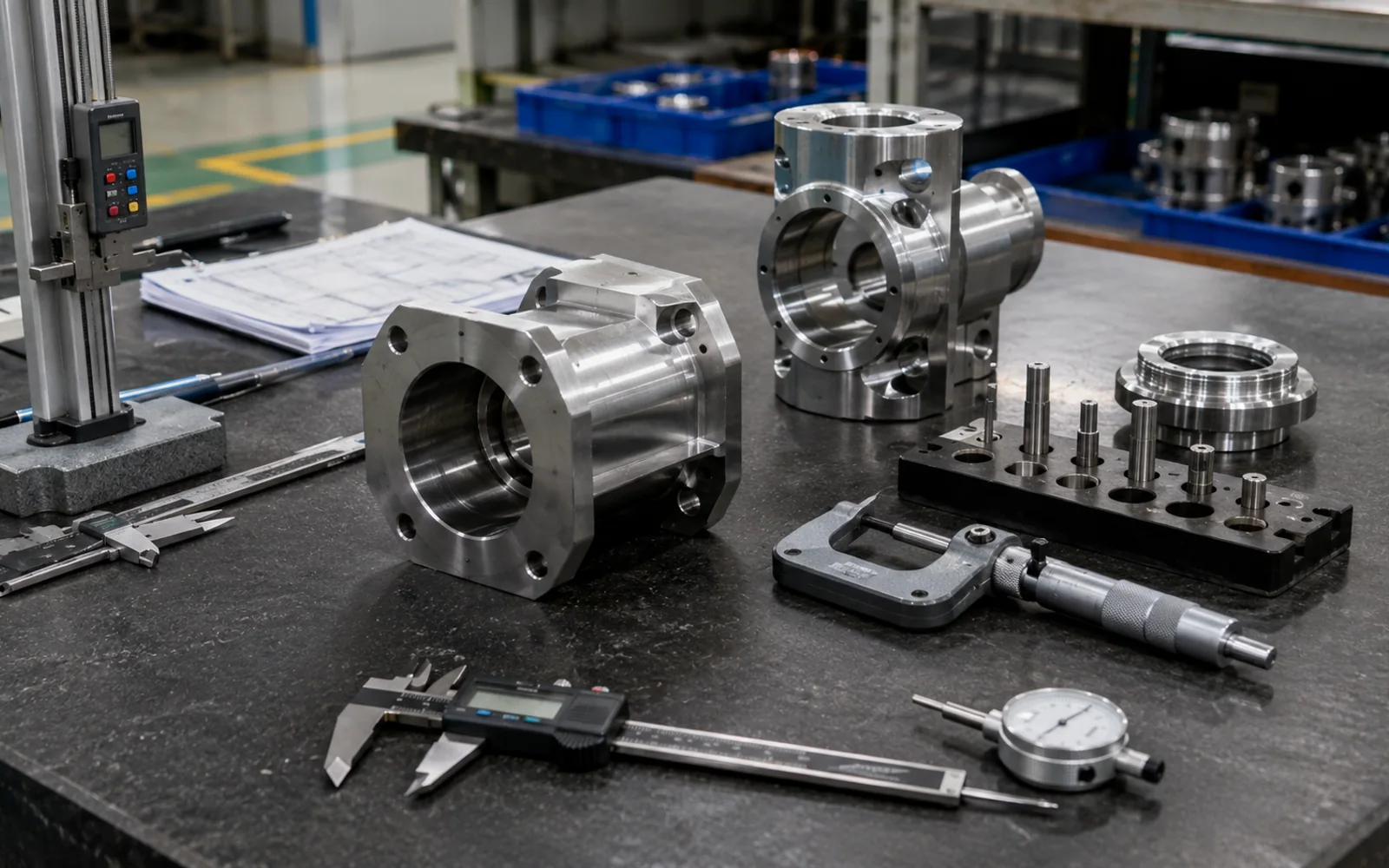
Specify the checks rather than asking only for a “quality report”. A dimensional report should identify the part and revision, the features checked, their requirements and the recorded results. Material or process records answer different questions and may also be needed.
If assembly fit or operation must be demonstrated, agree the mating parts, test conditions and pass criteria. Dimensional acceptance alone does not establish every aspect of functional performance.
Decide whether batch production can start before the first article is accepted and who can release that hold point. Acceptance of one part does not remove the agreed checks on subsequent parts. Sampling, critical-feature coverage and any repeat first-article requirement belong in the inspection plan.
A revised drawing needs a decision about work already started
Sending a new PDF is only the start of a change. The supplier may already have bought material, programmed the job or finished some parts. Identify the affected part numbers, old and new revisions, and the requirement that changed.
- Confirm the affected work. Ask which quantities are not started, in process, complete or already shipped. Agree whether the affected work should pause while the change is reviewed.
- Review the consequences. Check material, tooling, rework, inspection, cost and delivery effects. Do not assume an existing part can be reworked successfully.
- Approve the disposition. State which parts use the new revision and what happens to the old-revision stock. Keep the written decision with the order and its inspection records.
If a part misses a requirement, identify it and hold it for a decision. Any proposed rework or acceptance of the deviation should be reviewed by the authorized buyer or design representative. A one-batch concession should not silently become the requirement for the next order.
Make the delivered parts traceable to the accepted version
Before dispatch, match the part identification, quantity and revision to the order. Agree any batch, heat or serial-number traceability needed; these are not interchangeable levels of identification. The requested inspection and material records should be linked to the relevant parts or batches.
For assemblies or matched sets, specify the supplied condition, match marking and any loose items. Add protection for finished surfaces, packing requirements and handling information appropriate to the destination. Receiving staff should be able to identify what arrived without reconstructing the enquiry from old messages.
Keep approved deviations and the final document list with the delivery record. If third-party inspection is required, agree its scope, timing and cost before order or shipment. Our quality and inspection page sets out the available project support and buyer-paid inspection arrangements.
What should you send for a build-to-print quotation?
Start with the current part definition, quantity and required delivery condition. Mark missing information as open. The downloadable checklist covers file versions, material, acceptance, assembly, packing and the decisions needed before production.
ROCKVANTA reviews drawing-led manufacturing enquiries and assigns the required work to the relevant manufacturing base. Send the drawing, model or sample reference with the material and inspection requirements. The review establishes the proposed supply scope and any technical questions to resolve for quotation.
For a repeat order, identify the previously accepted revision and say whether anything has changed. Confirm quantity and timing again rather than treating an old quotation as current.